How a job goes
You send the first message, and we take the job through to the last downspout.
Get a quote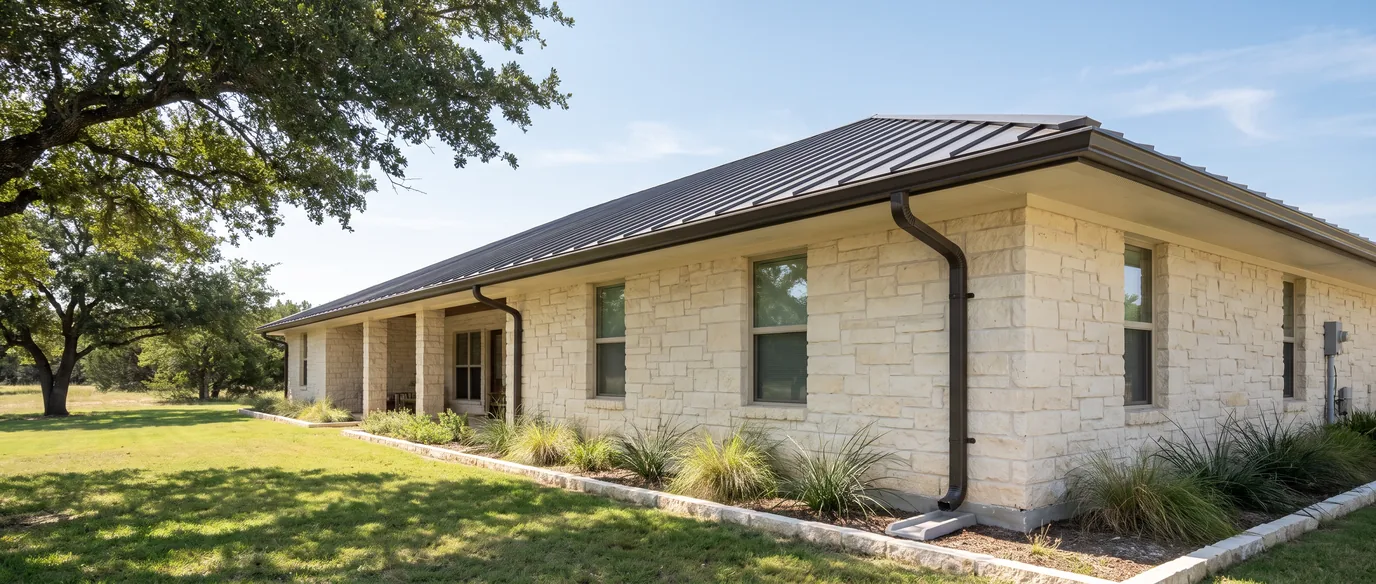
We hang seamless gutters in aluminum, steel, and copper on hidden hangers and install downspouts that carry water away from your foundation.
We install new seamless gutter systems, replace old gutters, and make repairs that keep them working. We also handle drainage at the bottom of every downspout.
We form new or replacement gutters on site to the length of each wall, so the run has no seams between corners.
We fix leaking corners and seams, loose hangers, sagging runs, and rotted fascia boards behind the gutter.
We fit micro-mesh and screen guards to keep live oak leaves and catkins out of the gutter.
We clear gutters by hand and flush downspouts so they drain again.
We use downspouts, extensions, splash blocks, and buried lines to move roof water away from the foundation.
We install half-round gutters with round downspouts, plus copper gutters and copper rain chains.
Tell us what the gutters are doing. We’ll come look before we quote anything.Get a quote
Most leaks start at a seam, a loose hanger, or a downspout that dumps water at the foundation. We pay attention to those parts on every job.
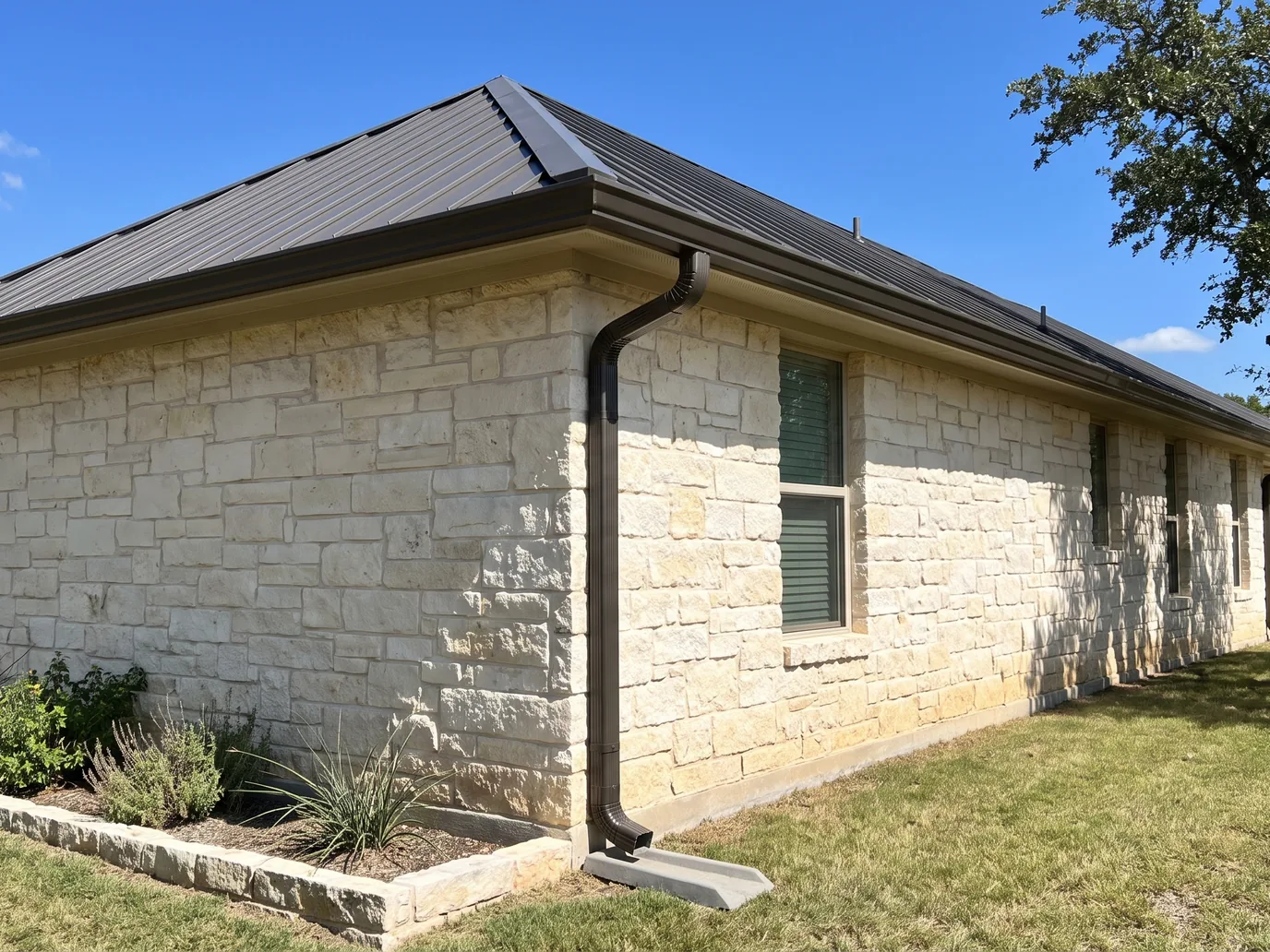
We form the seamless run on site in one piece from corner to corner, so there are no joints along the wall to leak.
Hangers sit inside the gutter and screw through it into the fascia board, so you don’t see them from the ground.
Two runs meet at the corner, each cut at 45 degrees, and we seal the joint.
Two crimped elbows carry water from the outlet under the eave back to the wall.
Short metal bands hold the downspout flat to the wall.
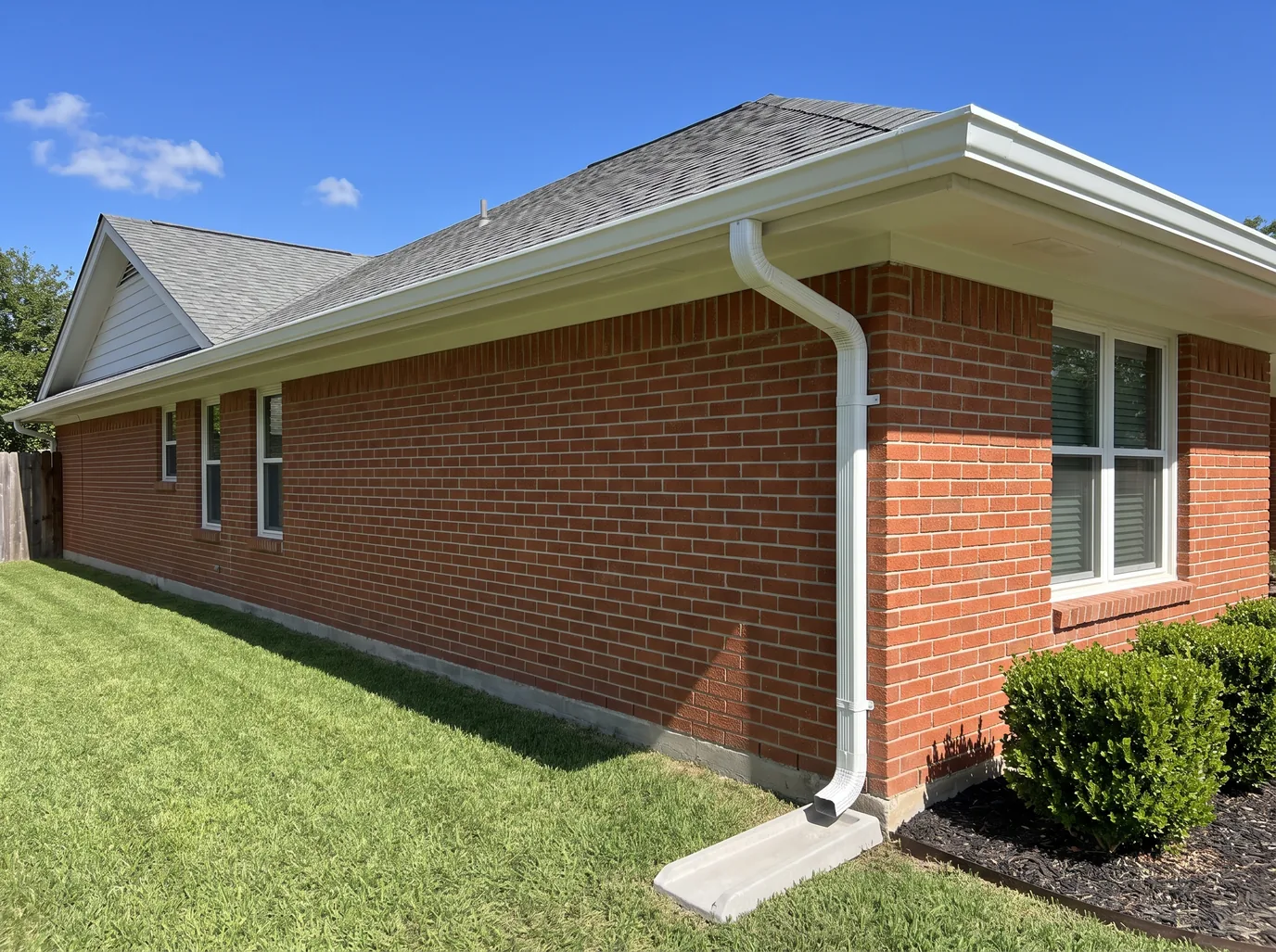
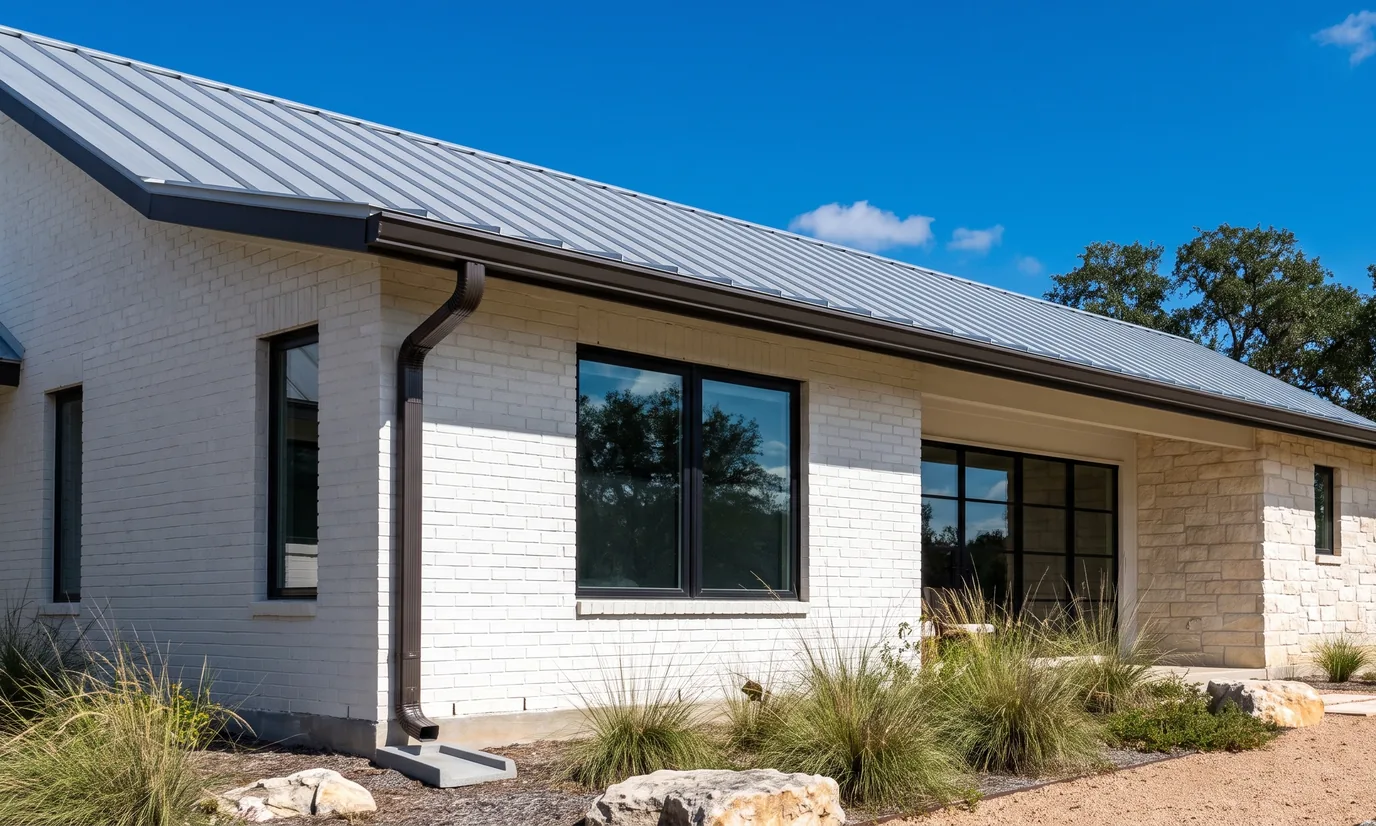
A sloped concrete block at the bottom of the downspout spreads water out and away from the foundation.
The right gutter depends on your house and roof, so compare aluminum, Galvalume steel, and copper to see how they differ.
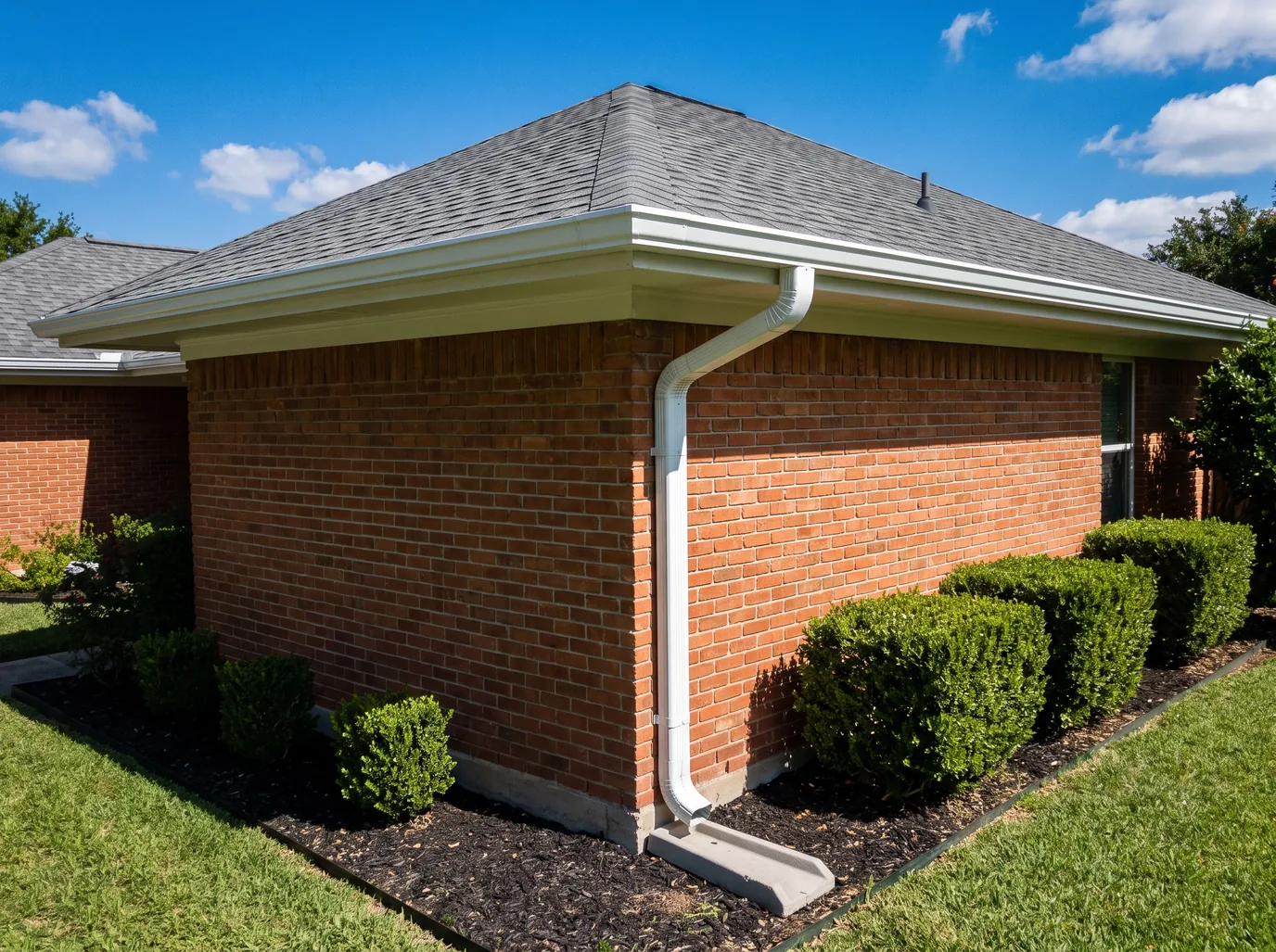
Aluminum is the most popular gutter material in Austin. It resists rust and comes in many colors to match your trim or roof.
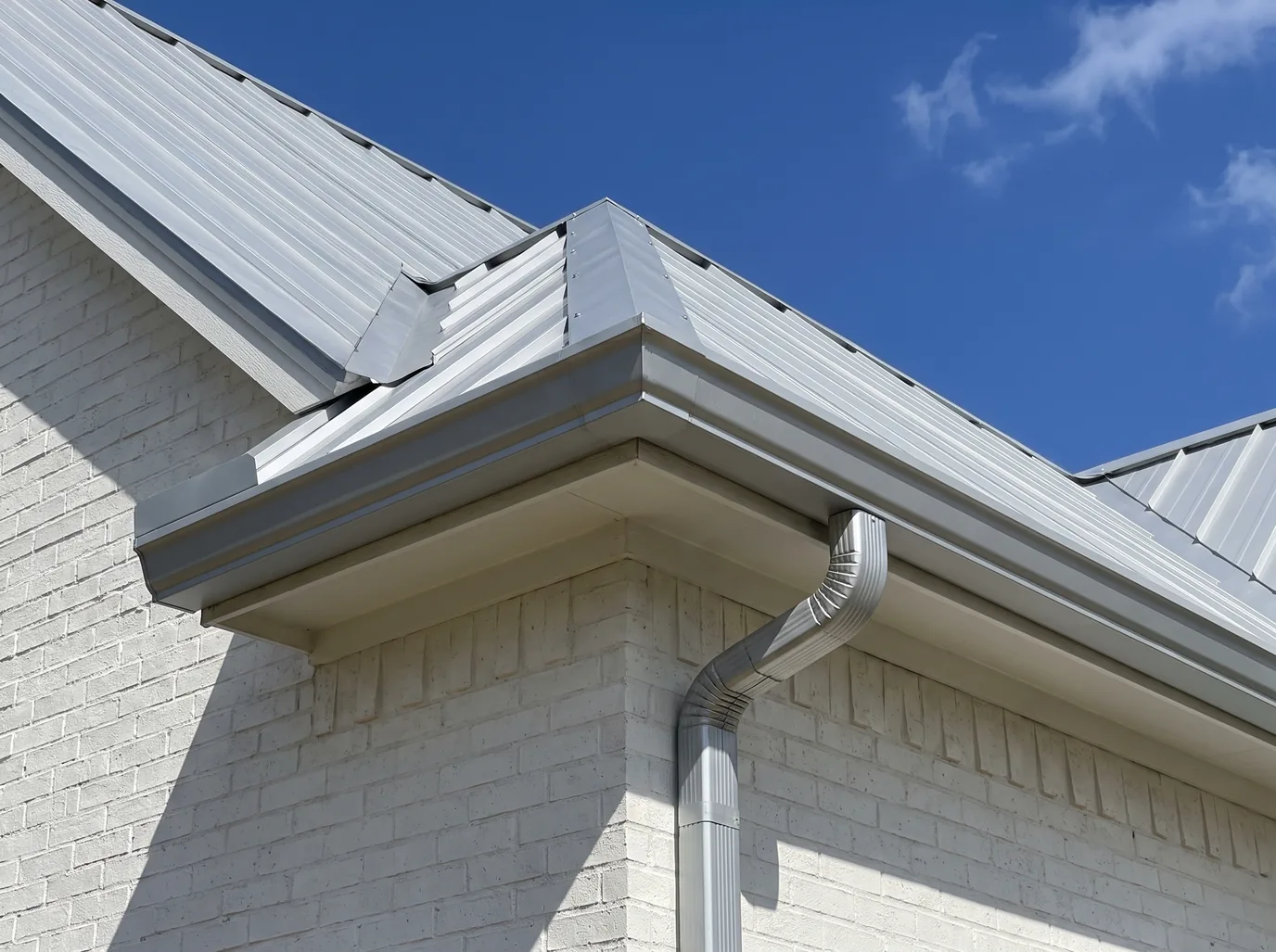
Galvalume steel is heavier than aluminum. A steel gutter can match the silver of a Galvalume metal roof.
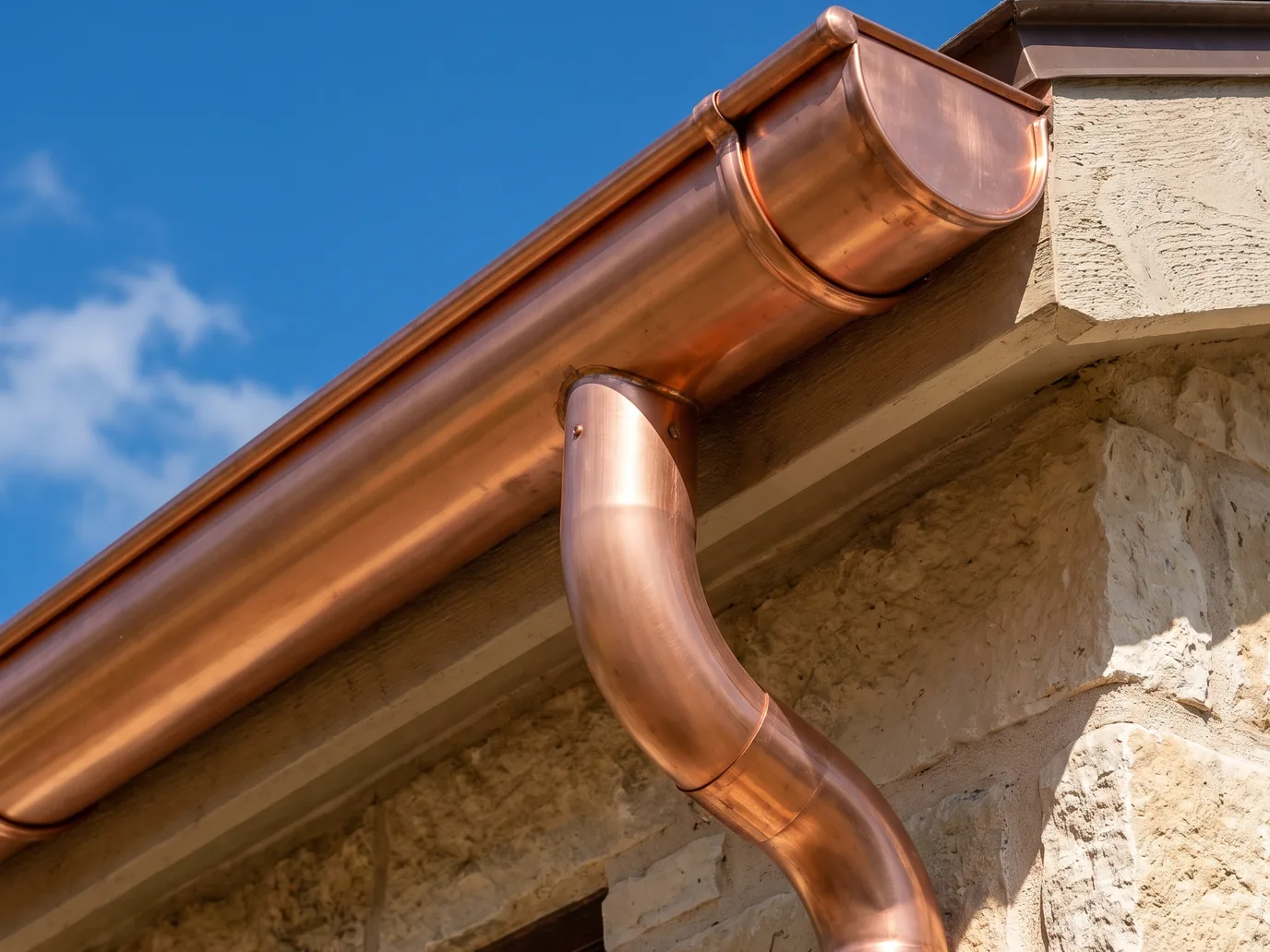
Copper half-round gutters and round downspouts never rust and develop a patina as they age.
You send the first message, and we take the job through to the last downspout.
Get a quote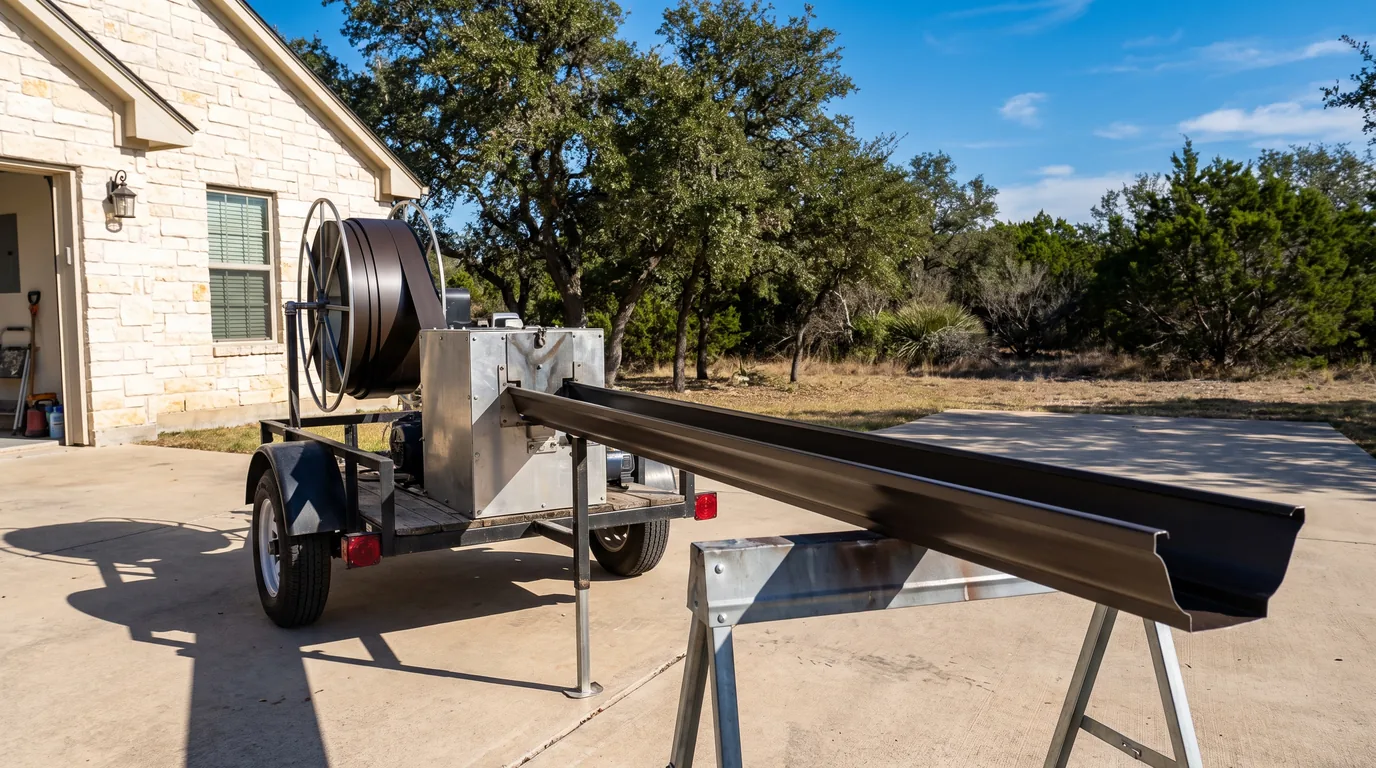
The quote form lets you tell us your address and what’s going on with your gutters. We’ll set a time to come look.
We measure each wall, check the fascia board, and look at where the water lands now. Then we give you a written quote.
We roll seamless gutters from a coil through a machine in your driveway, then cut each run to its wall’s length.
We put hangers inside the gutter, miter and seal the corners, and run water through the system before we leave.
We work in Austin and the towns around it in Travis, Williamson, and Hays counties. If your town isn’t in the list, ask us anyway.
See the service areaGet plain answers on costs, sizes, materials, guards, and rainwater, with sources named in each guide.
Compare what Angi, HomeGuide, and Fixr publish for gutter installation, repair, and cleaning, including Austin figures where available.
See how Austin’s rainfall intensity affects the choice between 5-inch and 6-inch gutters, as well as downspout size and spacing.
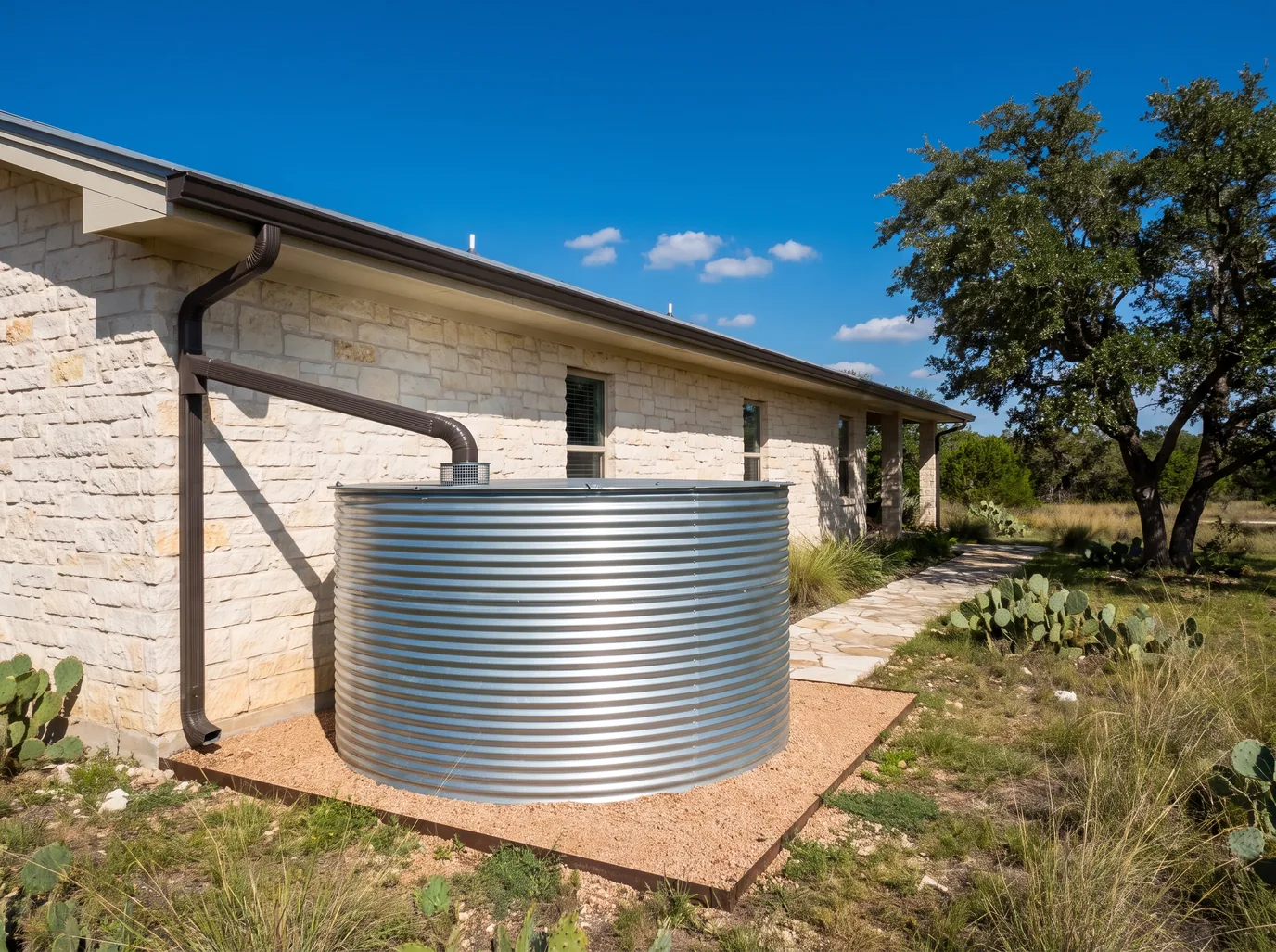
Learn about Austin Water’s rebate, the drainage charge discount, the state sales tax exemption, and HOA rules.
Seamless gutters are formed on site from a coil, with one piece per wall from corner to corner. Sectional gutters have seams joining their short lengths, and most of their leaks start at those seams. The materials guide compares seamless and sectional gutters.
5-inch K-style gutters fit most houses. 6-inch gutters carry more water, which suits large roofs, steep roofs, and long runs that collect the most rain. Our guide to gutter and downspout sizes has Austin’s rainfall figures.
No, gutter guards don’t mean you’ll never clean your gutters. They keep leaves and catkins out of the gutter, though debris still collects on top of the guard and needs brushing off from time to time.
Your downspouts should drain away from the foundation. Each one should end on a splash block, an extension, or a buried line that carries water out to ground that slopes away from the house, as we cover in downspouts and drainage.
Yes, aluminum and steel gutters come in a range of factory colors, so they can match your roof, trim, or brick. Copper is left bare and weathers on its own.
Yes, we connect downspouts to rain barrels and tanks, including the diverter and the run from the downspout to the tank. We don’t sell or install the tanks themselves. Austin Water’s rebate is covered in our guide to rainwater collection in Austin.